Guaranteed cheaper than any other lab in Europe, I'm also usually faster, for the same results.
Starting with a deep knowledge and understanding of all video formats. I acquired tools to read/write them properly.
Starting with a deep knowledge and understanding of all video formats. I acquired tools to read/write them properly.
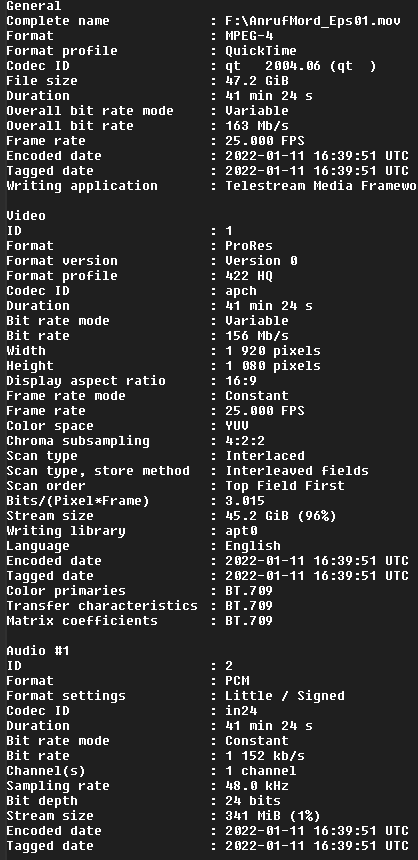
The files sent to me are converted in any requested format, creating a ready to broadcast master that will have been checked and corrected to comply with the various broadcasters standards:
PAL, SECAM, NTSC
23.98, 24, 25, 29.97, 30, 48, 50, 60 FPS
SD, HD, 2K, 4K, 8K...
Interlaced or progressive
1.33, 1.66, 1.77, 1.85, 2.39...
ProRes 422HQ, DNxHR, XDCAM, H.264, H.265...
DCP creation
Audio normalization
Anything, really.
Uploading directly to the brodcaster and/or the storage of your choice (including physical), PAD files are transfered via ASPERA, SIGNIANT, S3, FTP connections…
23.98, 24, 25, 29.97, 30, 48, 50, 60 FPS
SD, HD, 2K, 4K, 8K...
Interlaced or progressive
1.33, 1.66, 1.77, 1.85, 2.39...
ProRes 422HQ, DNxHR, XDCAM, H.264, H.265...
DCP creation
Audio normalization
Anything, really.
Are also involved...
Metadata management
Subtitles and forced subtitles management.
Delivering any type of subtitle file separated from the video or burned into it.
Multilingual videos and audio synchronization
Delivering audio to the broadcaster's standard, separated from the video or merged into the video file, in the required channels.
HD blow up
HDcam and BETAcam digitization
When done correctly, transcoding is also a way to gain space (therefore transfer speed) without any visible quality loss.
Ask my regular clients :
"Knowing the path"
I started learning in a 3D animation school (BELLECOUR) back in 2010, lessons that never left me and gave me a dinstinct vision on my work.
Later a two-year audiovisual degree specialized in photography (CIFACOM) gave me the technical basics.
The library I built after that wasn't just for show : books about photography and lighting but also lighting for theater and architecture, the history and legacy of those domains and the history of painting.
I'm not short of ideas and I've got a good feel for the craft. Always learning of course, any new or old trick, I also keep an active watch on the new equipments and technologies.
"Walking the path"
Stick to the plan...
I can never stress enough the importance of preparation and I like to be there the earliest possible in the project. Sometimes from the first draft of the script.
I don't like to leave anything to chance, and there is nothing worst to me than a problem we could have anticipated.
...or not
But my 50 pages checklist sometimes doesn't cut it. Many reasons for that :
- Time
- Budget
- Change of mind due to location, director, new ideas, life...
In those cases adaptation and responsivness are key. Experience in low budgets projects (where I started) and a good grasp of image design like I built certainly help.
No images without postprodution nowadays, but I think color grading deserves it's own space here (instead of lab) being a whole profession in its own right. Image oriented, my experience allows me to respond with limited budgets to the specific constraints of documentary films.
Any request can be met, from color grading shorts, to commercials to feature films with adapted deadlines and rates.
Same job...
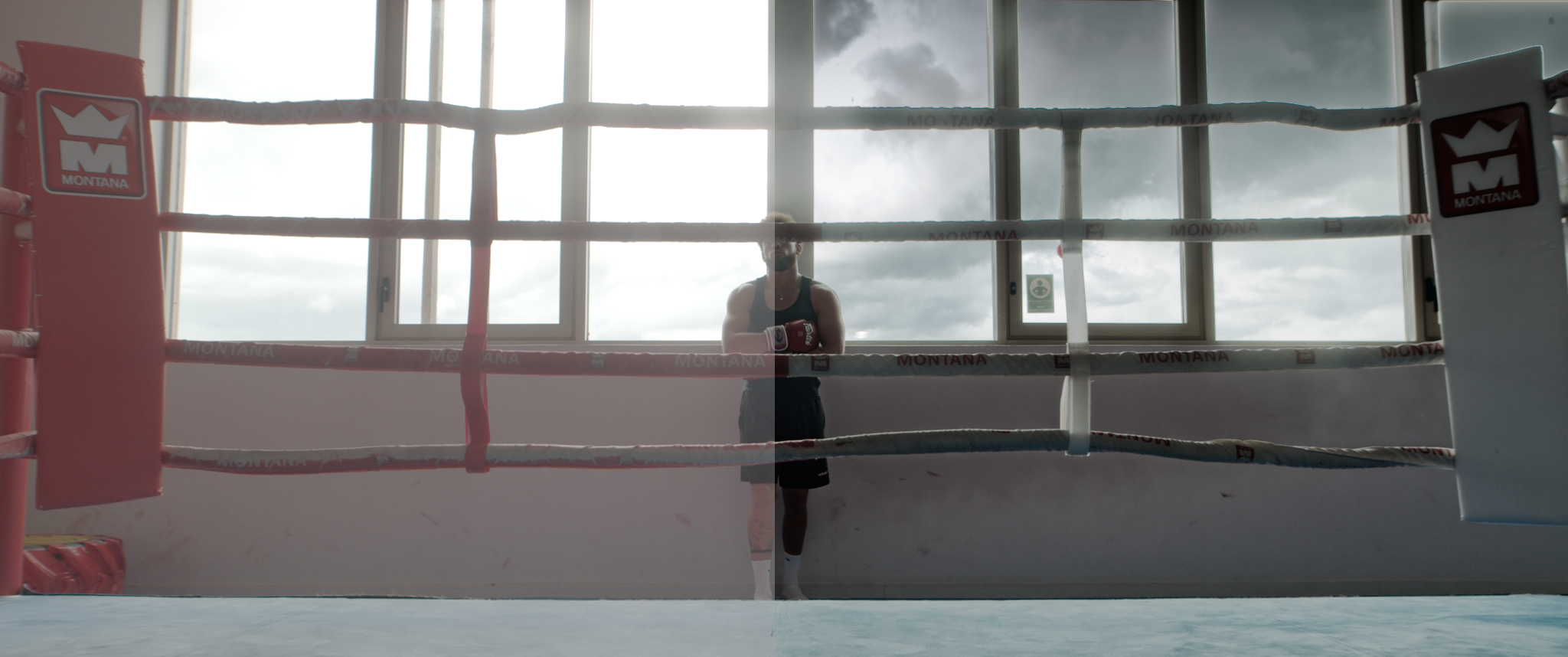
Color correction
To bring the production in line with the broadcaster's color space. Overcome defects that occurred during filming with cameras that are not always adapted to a broadcast image quality level.
Shot matching
Bring all shots to that same level.
Stylization
Make colorimetric changes to best meet the requirements of directors and directors of photography and most importantly the story.
...but different
Of course costs of production and work speed while shooting amount to mistakes or simply their was just no time to do it perfectly. And color correction can, to a certain extent, remedy this.
Shot matching : of course different locations, different time of days, a cloud that moves, bad cofee... Every shot will be different in a measure or another and for an infinity of reasons.
At last stylization. Well this is the most human part, and it has to go through dialogue between me and the production crew. So no need to explain here why this is litterally a different job with every production.
Being cinematographer at first, I wasn't satisfied with what they did to my images.
So I started learning. I'm still learning. But people trusted me more and more whith their movies, big or small, and it's still a joy to manage to reveal the full potential a camera has to offer.
They chose us